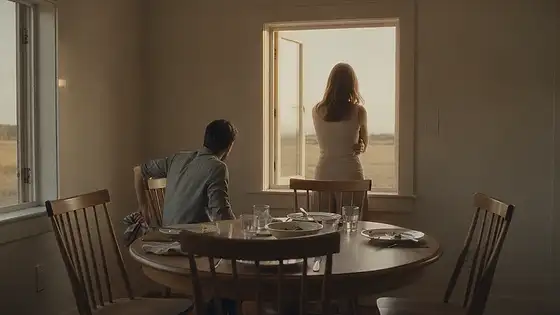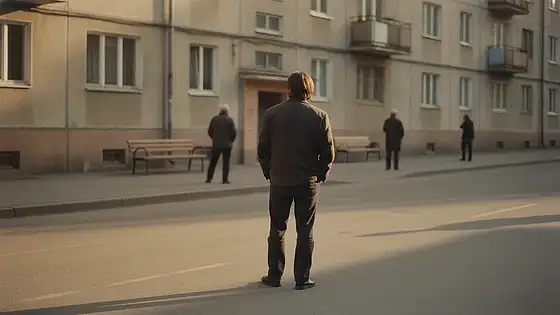
People arrive at the term fearful-avoidant attachment from opposite directions. Some got here through a partner: the person who texted all evening and then went quiet, who talked about the future and then cancelled the weekend, who seemed to want everything and then nothing. Others got here through themselves, after noticing that the moment a relationship starts to feel safe is the moment something in them starts looking for the exit.
Both readers are asking the same question in different words: what is this pattern, and does it have a name that actually explains anything. This page gives the name its plain meaning, shows the mechanism behind it, and maps where the rest of this site takes each part further. No test, no scores, no verdicts about anyone.
What is fearful-avoidant attachment?
Fearful-avoidant attachment is an adult pattern in which the wish for closeness and the defence against closeness run at the same time. The person genuinely wants connection and moves toward it; as the connection deepens, a protective response switches on and they move away. The approach and the retreat are both real, both belong to the same person, and neither cancels the other. The term describes behaviour in relationships. It is not a diagnosis, not a personality type, and not a prediction about how any particular relationship will end.
Each part of the name is doing its own job, and the jobs are worth separating. Avoidant is the half that points at the retreat: the distance, the withdrawal, the sudden need for space. Fearful is the half that names what the retreat protects against: closeness in this pattern carries a sense of risk, so the very thing that is wanted is also the thing that sets off the alarm. Put together, the name describes someone whose comfort and whose threat response are attached to the same person.
The same pattern travels under another name: disorganized attachment. That word comes from the research classification, while fearful-avoidant is the description used for adults in relationships. Some writing also hyphenates them into a single label. They refer to the same thing, and the names get mixed up in search, which is why the names have their own section on this site, along with the signs, the comparison with dismissive avoidance, and the page about where the pattern is thought to come from.
What the definition deliberately leaves out matters as much as what it includes. It makes no claim about how much love is present; people who fit this description can love intensely, and the intensity itself can be part of what triggers the retreat. It makes no claim about intent; the pull-away tends to arrive as a state, not a decision. And it makes no claim about the whole person. An attachment pattern covers the narrow region of behaviour around closeness under pressure, and nothing beyond it.
Another thing it is not: the worst attachment style. That framing circulates online, and this site does not use it, because the descriptive frame the term comes from does not rank styles. A pattern in which closeness triggers both the wish and the alarm can make relationships harder to steady. That is a statement about difficulty, not about worth.

What is the cycle that defines it?
If any mechanism holds this whole pattern together, it is the cycle: closeness rises, the protective response switches on, distance follows, the pull toward the person returns, and the sequence starts again. The alternation is the style. Take away the cycle and what remains would be either a plainly warm pattern or a plainly distant one; fearful-avoidant is the name for both running on the same track.
From the inside, the sequence does not announce itself as fear. A good evening happens, something honest gets said, plans start including the future, and then a pressure arrives that has no story attached to it yet. Reasons come afterwards: a busy stretch at work, a need for a quiet week, a feeling that things are moving fast. The reasons are true and beside the point. Later, with the distance established, the pull toward the person comes back, and the earlier retreat can look inexplicable even to the person who did the retreating.
From the outside, the same sequence reads as hot and cold, and that phrase is what partners type into a search bar. This site treats hot and cold as a label to be unpacked, not a behaviour to be confirmed. What looks like inconsistency from the outside is, from the inside, consistency of a different kind: the same trigger producing the same protective move, again and again, with warmth on either side of it.
The cycle is also why timing confuses people. The retreat in this pattern tends to follow closeness rather than conflict. Partners look backward for the fight that caused the silence and cannot find one, because the cause was the good week itself. The mechanism behind that, the phase people call deactivating, and the situations that reliably switch the cycle on are all taken apart in the cycle section, which is the closest thing this site has to a centre.
A note on what the cycle is not. It is not a game, and it is not evidence of indifference. It is also not something a partner causes or can steer with the right sequence of moves. Sites that promise tactics for it are selling a control that the mechanism does not offer.
How do you recognise it?
Recognition in this pattern comes from repetition, not from any single event. Anyone can pull back after a hard week; anyone can feel crowded once and ask for space. What people recognise as fearful-avoidant is a shape that repeats across time and across relationships: intense beginnings, retreat at the point of deepening, a return once distance is restored, and the same sequence waiting in the next relationship as well.
Seen in a partner, the shape tends to show as contradiction. Strong pursuit followed by unexplained flatness. Vulnerability offered and then treated as if it had been a mistake. Plans made with real enthusiasm and then softened, postponed, or quietly dropped once they came close. The contradiction is the signature: a plainly distant person reads as distant, but a fearful-avoidant partner reads as if different people were taking turns.
Recognised in oneself, it sounds different. What people describe is wanting a relationship and distrusting it at the same time; scanning a calm partner for what is about to go wrong; feeling relief when closeness eases and then missing the person the moment they accept the distance. There is also the harshest version of the question, which takes some form of: why do I ruin things exactly when they get good.
None of this amounts to a checklist that assigns anyone a category, and this site does not run quizzes. Behaviour has many explanations, and a stretch of stress can imitate almost any pattern. The detailed observable signs, the quiet and loud readings of the style, and the comparison with dismissive avoidance all live in the style section; how self-recognition tends to happen inside a couple is described in the relationships section.
In relationships, in breakups, in change
A definition only gets a reader so far, because nobody searches this term in the abstract. There is a relationship going well and confusingly at the same time, or a breakup that arrived without warning, or a private decision to stop repeating the pattern. The rest of this site is organised around those situations, a section for each, and this page is the map.
| The question you arrived with | Where it is described |
|---|---|
| What is this pattern called, what does it look like, how is it different from dismissive avoidance? | The style — names, signs, quiet and loud readings, and where the pattern is thought to come from. |
| Why do they reach out and then pull away? What switches it on? | The cycle — the mechanism itself, the deactivating phase, and the situations that trigger it. |
| What does this look like inside a couple? Is it testing, or is it how they love? | In relationships — the pattern in dating, in commitment, and what partners actually face. |
| Why did the breakup happen this way, and do they come back? | Breakups — how endings tend to unfold in this pattern, and the honest version of the return question. |
| Can this change? What does moving toward secure look like? | Healing — what change means for this pattern, described without promises or timelines. |
The relationships section is written for both readers at once: the partner trying to understand behaviour that keeps reversing itself, and the person recognising their own pattern in the middle of a relationship. The breakup section covers the part of this topic people search in the hardest weeks, including the question this site refuses to answer with false confidence: whether a particular person will come back. And the healing section describes what change realistically involves, on the understanding that a learned pattern can shift and that nobody can put a date on it.
Each section stands on its own, so there is no required order. A crisis points to the breakup section; a confusing relationship points to the cycle; finding your own behaviour in this page points to healing. Start where the situation is.
What this site is and is not
This site describes a narrow pattern of adult attachment and stays inside that boundary. It does not cover the other attachment styles, does not compare this pattern with the anxious type, and does not summarise attachment theory as a whole. It describes dismissive avoidance only where the patterns need telling apart. Narrow scope is the point: the pattern is confusing enough to deserve a whole site, and a site that describes everything describes nothing well.
What this site does not do
A guide about a pattern this personal owes its readers a clear list of refusals.
- No diagnosis
- Attachment styles are descriptive categories from research, not clinical ones. Nothing here can tell you what is happening in your mind or anyone else's, and no page on this site will pretend otherwise.
- No quizzes or tests
- A score implies a verdict, and verdicts are what this pattern least needs. Recognition here happens through description: read the behaviour, see whether it repeats, and hold the label loosely.
- No tactics
- Nothing here teaches how to make a fearful avoidant miss you, chase you, or come back. Those levers do not exist, and writing as if they do misleads one reader while dehumanising the other.
- No numbers or timelines
- No page claims how common the pattern is, how long a phase lasts, or what share of people change. Where we have no source, we write none, and we describe sequences instead of schedules.
- No promised outcomes
- Change in this pattern is possible and real; guaranteed is a different word. Any page about healing here describes the work and stops short of the promise.
What it does instead
- Describes the mechanism
- The cycle, taken apart carefully enough that both the person inside it and the person next to it can recognise what they are looking at.
- Serves both readers
- Partners and people with the pattern read the same pages here. Nothing is written to make either of them the villain of the other's story.
- Says where description ends
- Pages that touch origins or change state plainly what a description cannot do, and that the next step beyond this site is a conversation with a professional.
How these boundaries are kept, who writes here, and what happens when something needs correcting are documented on the about page and in the editorial policy. The short version: this is an editorial project, it cites its frames rather than inventing authority, and it would rather leave a question unanswered than answer it with a number nobody can source.